


Challenge
The client operated a business-critical virtualized infrastructure hosted in a legacy data center environment with aging hardware, limited scalability, and operational risks related to redundancy and disaster recovery.
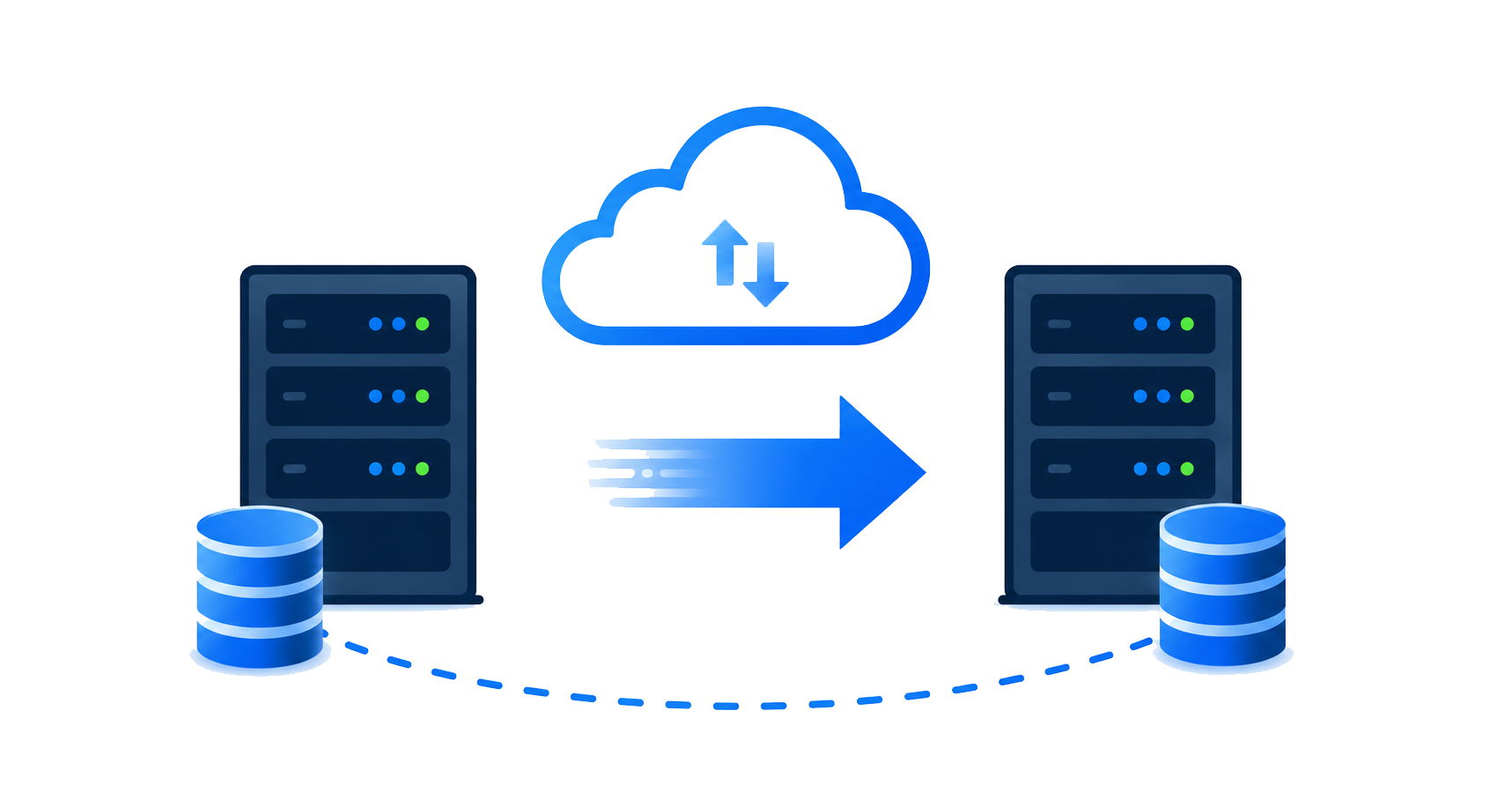
The objective was to migrate the full production environment to a modernized infrastructure platform with minimal downtime, no data loss, and complete business continuity.
Solution
Designed and executed a staged enterprise-grade migration strategy involving:
- Infrastructure assessment and dependency mapping
- VM replication and synchronization
- Incremental data transfer
- Network reconfiguration planning
- Rollback and disaster recovery procedures
- Final cutover orchestration
The migration was performed using a phased synchronization approach, allowing the majority of data transfer and VM preparation to occur before the maintenance window.
Technical Specifications
Infrastructure Scale
- 143 Virtual Machines
- 20 TB replicated data
- Multi-tier application environment
- Production workloads
- Hybrid Windows/Linux infrastructure
- Active Directory integrated services
- High-availability architecture
Virtualization / Cloud Stack
- Proxmox VE
- NAS storage
- ZFS replication
- Live migration orchestration
- HA clustering
- VLAN segmentation
Networking
- Site-to-site VPN
- Layer 2 migration strategy
- Firewall rule migration
- DNS transition planning
- IP renumbering procedures
- Reverse proxy migration
- Load balancer failover
Reliability / Continuity
- Rollback-ready migration plan
- Pre-migration validation
- Snapshot-based recovery points
- Replication integrity verification
- Service dependency mapping
- Disaster recovery procedures
- Multi-stage testing environment
Performance / Operational Metrics
- 13m 53s total downtime
- 99.98% service continuity during migration
- Zero reported data corruption
- Zero critical business process interruption
- Migration completed within planned maintenance window
- Successful post-migration validation of all services
Results
- Near-zero downtime migration
- Improved scalability and redundancy
- Enhanced disaster recovery readiness
- Reduced infrastructure risk
- Improved performance and maintainability
- Standardized virtualization environment